Easter Egg Star Decoration 3D Print Guide
The intersection of traditional holiday symbolism and modern additive manufacturing offers a unique canvas for creativity. An Easter Egg Star Decoration 3D Print is not merely a plastic object; it is a fusion of geometric precision and seasonal warmth. For designers, hobbyists, and small business owners, this model represents an opportunity to bridge the gap between digital design and tangible art. Whether you are looking to enhance your home decor, create personalized gifts, or expand your product line with seasonal items, understanding the nuances of this specific print can elevate your output from a simple prototype to a polished final product.
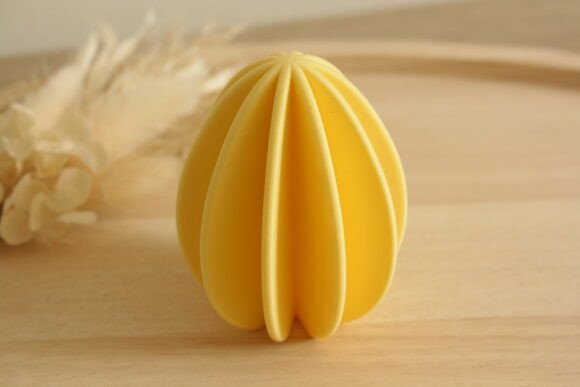
What makes this particular decoration interesting is its structural complexity combined with aesthetic simplicity. The star motif embedded within the egg shape creates a play of light and shadow that changes depending on the viewing angle and lighting conditions. This dynamic visual quality is difficult to achieve with traditional molding techniques but is inherent to the layer-by-layer nature of 3D printing. For creators, this means the final result is highly dependent on the process, offering a chance to experiment with materials, colors, and finishes to suit specific artistic visions or market demands.
Optimizing Your Workflow with Slicer Compatibility
To achieve results that mirror the high-quality imagery often associated with professional prints, the choice of file format and slicing software is critical. When you acquire this model, you are provided with two distinct options to accommodate different workflows: a 3MF file optimized for Bambu Slicer and a universal STL file.
The 3MF format is particularly valuable for users of Bambu Lab printers. Unlike older formats, 3MF containers can store project data, including specific print settings, plate types, and filament profiles. The included 3MF file is pre-configured to produce results very close to the reference photos. This saves significant time on trial and error, allowing you to focus on the creative aspects rather than technical calibration. However, it is important to remain grounded in reality; while the settings are optimized, physical outcomes can still vary. Factors such as room temperature fluctuations, filament moisture content, the condition of your print bed, and even minor environmental drafts can influence the final texture and dimensional accuracy.
For those utilizing other ecosystems, the STL file provides maximum flexibility. This format is compatible with industry-standard slicers like Anycubic Slicer, PrusaSlicer, CuraSlicer, and OrcaSlicer. It is crucial to understand that settings cannot be transferred one-to-one between different slicer engines. An infill pattern or support density that works perfectly in Bambu Slicer may require adjustment in Cura or PrusaSlicer to achieve the same structural integrity and surface finish. Users choosing the STL route must configure their own print settings. This requires a basic understanding of how layer height, wall thickness, and support interfaces affect overhangs and bridging, especially given the intricate star geometry within the egg.
Scaling Considerations and Dimensional Integrity
One of the primary advantages of digital manufacturing is the ability to scale models freely. The original dimensions of this Easter Egg Star Decoration are 60 mm × 57.37 mm × 75.38 mm. This size is ideal for tabletop displays, tree ornaments, or shelf accents. However, creators often wish to adapt designs for different contexts, such as miniature keychains or large centerpiece installations.
While scaling up is generally safe and often yields impressive details, scaling down introduces significant technical challenges. If you reduce the model too much, the fine lines forming the star pattern may become thinner than your printer's nozzle diameter can reliably extrude. Most standard nozzles are 0.4 mm; attempting to print features significantly smaller than this can lead to clogging, incomplete layers, or a loss of definition where the star pattern merges into a solid mass. Therefore, while the model can be scaled freely to create custom sizes, caution is advised when going below the original dimensions. The model is engineered to be printed safely at its original size without concerns, making it a reliable baseline for your projects.
Material Selection for Durability and Safety
The choice of filament goes beyond color; it dictates the functional lifespan and safety of your print. For purely decorative purposes displayed in climate-controlled interiors, standard PLA (Polylactic Acid) is often sufficient. It offers excellent detail resolution and a wide range of aesthetic finishes, from matte to silk.
However, practical application requires a more rigorous approach. If your Easter Egg Star Decoration 3D Print is intended for environments where it might come into contact with food, such as holding candies or serving as part of a dining table centerpiece, material safety becomes paramount. Furthermore, if the decoration will be used in particularly warm environments, such as a sunlit window sill or an outdoor spring gathering, standard PLA may soften and deform due to its low glass transition temperature.
In these scenarios, PETG is the recommended material. PETG offers a higher softening temperature tolerance, ensuring the structural integrity of the star cutouts remains intact under heat. Additionally, specific grades of PETG are considered food-safe, provided they are printed with clean nozzles and appropriate settings to minimize bacterial trapping in layer lines. Always verify the specific certification of your filament spool if food contact is a requirement. This distinction highlights the importance of matching material properties to the intended use case, a key principle for professional creators and educators teaching responsible manufacturing.
Creative Applications and Market Opportunities
Beyond the technical specifications, the true value of this model lies in its versatility across different sectors. For educators, this print serves as an excellent teaching tool for geometry, demonstrating how 2D patterns can be projected onto 3D surfaces. It allows students to explore concepts of symmetry, volume, and the physical limitations of additive manufacturing.
Small business owners and entrepreneurs can leverage this design for seasonal product lines. By experimenting with multi-color printing techniques, such as color changes at specific layer heights or using dual-extrusion systems, you can create unique variations that stand out in crowded marketplaces. Imagine a series of eggs where the star interior glows with a contrasting filament, visible only when held up to the light. Such attention to detail transforms a commodity into a collectible.
Interior designers and bloggers can use these decorations to craft themed content or stage photoshoots. The interplay of light through the star cutouts creates natural photography opportunities, adding depth and interest to visual storytelling. For freelancers offering customization services, this model provides a base that can be post-processed. Sanding, painting, or applying metallic waxes can elevate the print to look like ceramic or metal, appealing to clients seeking high-end decor without the associated cost.
Ensuring Consistency and Quality
To maintain high standards across multiple prints, organization and consistency are key. Keep a log of your successful print settings for the STL version, noting the specific slicer version, filament brand, and environmental conditions. This documentation helps replicate success and troubleshoot failures efficiently. Remember that digital products, by their nature, do not allow for returns once downloaded. The value lies in the potential you unlock through your skills and equipment. Therefore, please only purchase the file if you have the necessary hardware and willingness to engage with the printing process.
Ultimately, the Easter Egg Star Decoration 3D Print is a testament to what is possible when traditional motifs meet modern technology. It invites you to not just print an object, but to interpret a design. Whether you are refining your slicing parameters, experimenting with new materials, or finding novel ways to display your work, the process is as rewarding as the final product. Embrace the variables, learn from the imperfections, and let the precision of 3D printing bring your creative vision to life.