Crafting 3D Papercraft Christmas Bauble Dangler
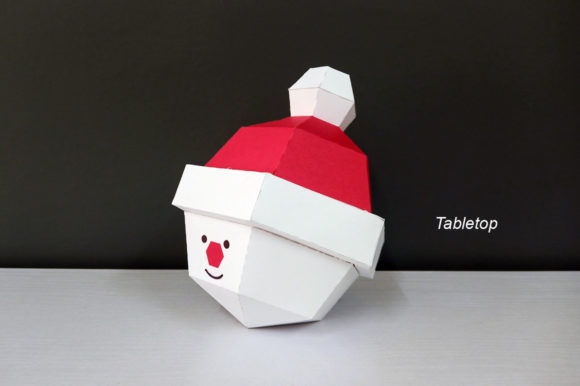
Transforming flat digital files into tangible, three-dimensional art offers a unique tactile experience that static screens simply cannot replicate, and the 3d Papercraft Christmas Bauble Dangler stands as a perfect example of this creative evolution. For graphic designers and visual creators, understanding the bridge between 2D templates and 3D models opens new avenues for branding, packaging design, and immersive marketing campaigns. This project invites you to convert our precise 2D templates into a charming Santa Claus figure, blending traditional craft with modern design precision.
In the realm of professional graphic design, the ability to visualize how a flat layout translates into physical space is crucial. Whether you are developing packaging design, creating experiential retail displays, or designing limited-edition merchandise, the principles used here mirror high-level production workflows. The process of taking vector paths from an SVG or DXF file and manipulating them into a structured form teaches valuable lessons about visual hierarchy, structural integrity, and the importance of accurate measurements in print design.
The Design Workflow: From Vector to Volume
This specific project requires approximately 1 to 2 hours to complete, resulting in a finished model with a height of 6.6 inches, a width of 5.4 inches, and a depth of 4.7 inches. These dimensions are not arbitrary; they represent a carefully calculated balance to ensure the model stands correctly while maintaining aesthetic proportions. As a designer, you will appreciate the attention to detail in the provided assets, which include templates in PDF, SVG, DXF, and EPS formats. These file types are industry standards, ensuring compatibility with various design workflows and cutting machines.
To achieve the best results, one must adhere to strict printing guidelines. The templates are optimized for both A4 and Letter size paper, but it is vital to print at 100% scale without scaling to fit. This ensures that the glue tabs and score lines align perfectly, a concept directly applicable to brand identity consistency across different media formats. Using cardstock paper—specifically three sheets of white and one sheet of red—provides the necessary rigidity, much like selecting the correct grammage for premium business cards or brochure covers.
Essential Tools for Precision Assembly
Just as a digital designer relies on a calibrated monitor and precise input devices, the physical assembly of this model demands specific tools to maintain professional quality. The following items are essential for converting the 2D material into a polished 3D model:
- Colored Printer: Ensures accurate color reproduction, critical for maintaining brand color palettes.
- Craft Knife and Scissors: For clean cuts that define the silhouette of the design.
- Scorer or Bone Folder: Creates crisp fold lines, enhancing the geometric precision of the final object.
- Non-working Ball Point Pen: An alternative tool for scoring without damaging the paper surface.
- Ruler and Glue: Fundamental for alignment and structural stability.
Applications in Modern Visual Communication
While this project is a festive decoration, the skills and insights gained have broad applications in digital marketing and creative projects. Consider how the construction of this bauble relates to logo design; just as the paper must fold correctly to reveal the intended shape, a logo must be scalable and adaptable across various platforms. The "Santa Claus Make your own" aspect encourages user engagement, a key goal in social media graphics and interactive advertising campaigns.
Furthermore, the use of distinct color blocks (red and white) demonstrates the power of a limited color palette in creating strong visual impact. In UI design and web design, such clarity helps guide user attention and improves usability. The physical act of assembling the model also provides design inspiration for texture and depth, encouraging creators to think beyond the flat screen when conceptualizing editorial design layouts or presentation materials.
Ultimately, the value of this exercise lies in its demonstration of patience and precision. Turning a 2D template into a 3D model reinforces the idea that great design is not just about how something looks, but how it functions and feels. By mastering these transitional techniques, designers can enhance their professional presentation capabilities, offering clients innovative solutions that stand out in a crowded marketplace. Quality creative assets, whether digital or physical, always serve to improve both aesthetics and communication, proving that thoughtful design choices yield the most memorable results.