Crafting Depth: Integrating the White Narcissus Flower 3D Shadow Box into Your Creative Workflow
In the realm of modern crafting and interior design, the transition from a flat digital concept to a tangible, three-dimensional object requires more than just a cutting machine; it demands a structured approach to layering, material selection, and assembly. The White Narcissus Flower 3D Shadow Box represents a prime example of how digital assets can be leveraged to create sophisticated physical decor. This project is not merely about cutting paper; it is about understanding depth, light interaction, and the sequential logic required to build a multi-layered composition. For professionals, hobbyists, and small business owners alike, mastering this type of layered papercut design offers a scalable method for producing high-value handmade goods or personalized home accents.
The core appeal of this specific design lies in its seven-layer architecture. Unlike simple die-cuts that rely on a single plane, a shadow box utilizes negative space and varying elevations to mimic the organic structure of the subject—in this case, the classic trumpet-shaped blooms of the Narcissus. When planning a project around this asset, the workflow begins long before the machine starts cutting. It starts with file preparation and compatibility checks. The inclusion of multiple file formats such as SVG, DXF, EPS, AI, PNG, and PDF ensures that regardless of your preferred software ecosystem—whether you are using Cricut Design Space, Silhouette Studio, Adobe Illustrator, or Inkscape—the integration is seamless. This versatility is crucial for maintaining efficiency in a production environment where time spent troubleshooting file errors is time lost.
Pre-Production Planning and File Optimization
Before initiating the cutting process, successful implementation relies on selecting the right source file for your specific hardware and skill level. If you are operating within the Cricut ecosystem, the SVG file is typically the most robust choice. It preserves layer integrity, allowing you to manipulate each of the seven distinct levels independently. For Silhouette users on the free software version, the DXF file provides the necessary vector paths without requiring a designer edition upgrade. However, for those looking to customize the design further—perhaps altering the petal shape or adjusting the sun-like background rays—the AI or EPS files are indispensable. These professional vector formats allow for node editing, ensuring that any modifications remain crisp and scalable.
Organization at this stage prevents bottlenecks later. A practical workflow involves importing the chosen file into your design software and immediately grouping layers by their intended function: background, mid-ground foliage, foreground blooms, and framing elements. This digital sorting mirrors the physical assembly process. By color-coding these groups in your software (e.g., assigning the vibrant orange-gold background to one layer and the crisp white petals to another), you create a visual map that guides the cutting order. This step is particularly vital when working with the high-resolution PNG file included in the package, which serves as an excellent reference guide for manual alignment if you choose to print the design for hand-cutting or use it as a visual mockup for client approvals.
Material Selection and Machine Configuration
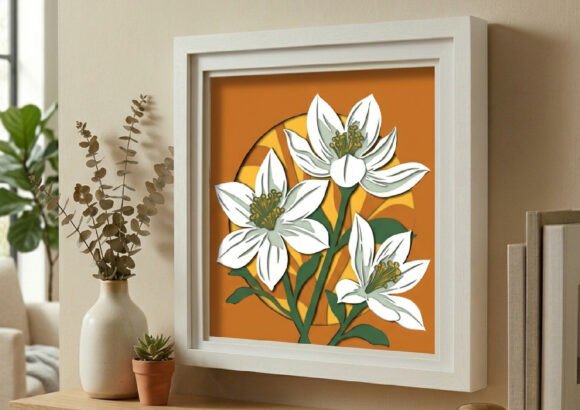
The quality of the final White Narcissus Flower 3D Shadow Box is heavily dependent on material choice. The design's elegance stems from the contrast between the pure white petals, the golden yellow centers, and the warm, radiating background. To achieve the intended "serene beauty," cardstock weight is a critical variable. For the structural layers, a 65lb to 80lb cardstock is generally recommended. This weight provides enough rigidity to hold the 3D form without sagging, yet remains flexible enough to adhere smoothly without buckling. Lighter papers may fail to support the depth required for a seven-layer build, while heavier boards might strain standard hobbyist cutting blades.
When configuring your cutting machine, precision is paramount. The intricate details of the narcissus trumpet and the fine lines of the radiating background require a sharp blade and appropriate pressure settings. It is advisable to run a test cut on a scrap piece of your chosen material to verify that the weeding process will be manageable. Since this design features delicate connections between layers, ensuring that the cut is complete but not overly aggressive prevents tearing during the removal of excess material. For laser cutter users, the vector files allow for precise power and speed adjustments to ensure clean edges without charring, which is essential for maintaining the "clean and sophisticated" aesthetic described in the product features.
The Assembly Process: Building Depth Systematically
Assembly is where the digital plan transforms into physical reality. The most effective method for constructing a seven-layer shadow box is a bottom-up approach, starting with the deepest background layer and working forward. Begin by securing the vibrant orange-gold background to the base of your shadow box frame. This layer sets the tone for the entire piece, symbolizing hope and renewal through its sun-like radiation. Once the base is fixed, introduce the subsequent layers using foam adhesive tabs or rolled paper spacers. The thickness of these spacers determines the overall depth of the piece; consistency here is key to a professional finish.
As you add the layers representing the foliage and the flower stems, pay close attention to registration. Misalignment at this stage can obscure the intricate details of the upper layers. The PDF guide provided with the asset often includes a printed template that can be used to mark alignment points on the frame, ensuring that each layer sits perfectly centered. When you reach the focal point—the crisp white petals and golden yellow centers—take extra care with adhesion. These top layers catch the most light and define the silhouette of the narcissus. Using a fine-tip applicator for glue or precise placement of foam tabs ensures that no adhesive bleeds onto the visible surfaces, preserving the clean look essential for modern interiors.
Integration into Business and Personal Projects
For entrepreneurs and small business owners, the White Narcissus Flower 3D Shadow Box offers a versatile product line for spring collections, wedding decor, or home staging. The modular nature of the design allows for batch production. By cutting multiple sets of layers simultaneously (provided your machine bed size allows), you can streamline the manufacturing process. The ability to customize colors via the AI or EPS files means you can offer bespoke versions to clients—swapping the traditional white for soft pastels or bold contrasts to match specific brand identities or event themes. This adaptability makes the asset a valuable resource for freelancers who need to deliver unique, high-quality results quickly.
In an educational or workshop setting, this project serves as an excellent teaching tool for spatial reasoning and fine motor skills. The clear separation of layers helps students understand the concept of z-index and depth perception in a tactile way. Educators can use the provided files to demonstrate vector manipulation, showing how a 2D image becomes 3D through strategic layering. Furthermore, the project's manageable complexity makes it suitable for group activities where participants can collaborate on different stages of the workflow, from weeding to assembly.
Long-Term Maintenance and Display Considerations
Once assembled, the longevity of the shadow box depends on environmental factors and display choices. Paper is susceptible to fading and warping under direct sunlight or high humidity. To preserve the vibrant orange-gold background and the purity of the white petals, it is advisable to display the finished piece in indirect light. Using a shadow box frame with UV-protective glass can significantly extend the life of the colors. Additionally, ensuring the frame is sealed properly prevents dust accumulation between the seven layers, which can be difficult to clean once the unit is closed.
The White Narcissus Flower 3D Shadow Box is more than a decorative item; it is a testament to the power of well-organized digital assets and precise execution. Whether utilized as a thoughtful handmade gift, a statement piece in a modern living room, or a product in a curated shop, its success relies on the careful orchestration of design, material, and method. By respecting the intricacies of the seven-layer design and utilizing the full suite of provided file formats, creators can consistently produce results that embody the serene beauty and symbolic renewal of the narcissus bloom. This systematic approach ensures that every project not only meets aesthetic standards but also fits efficiently into broader creative and commercial workflows.